Professional Garden Lighting Design Tips
Professional tips to transform your outdoor space with beautiful, intelligent garden lighting design.
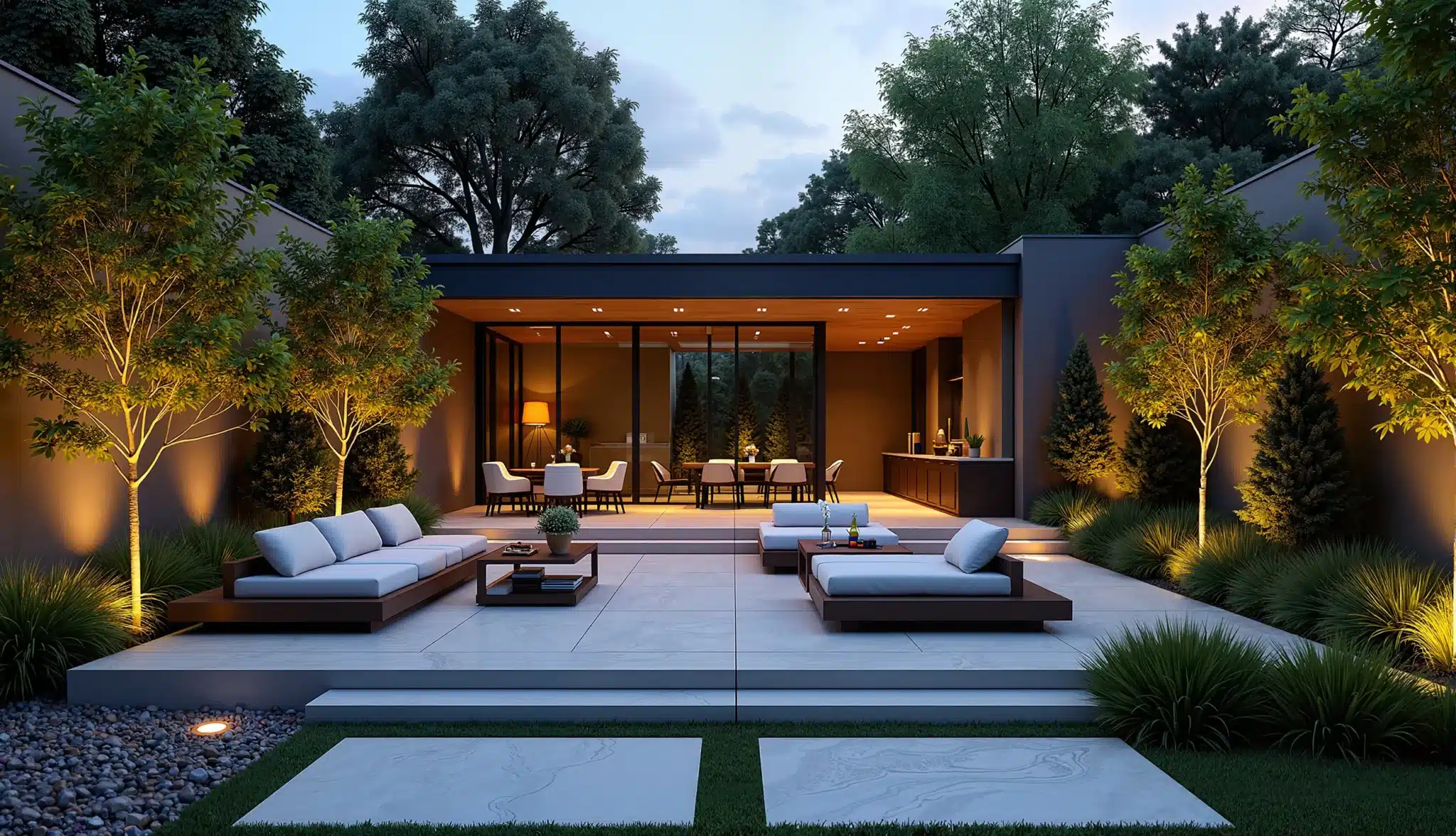
As the Chelsea Flower Show puts gardens in the spotlight, now is the perfect time to think about how to make your outdoor space shine—literally. Whether you have a generous lawn, a structured courtyard, or something in between, the right garden lighting can completely transform how your garden looks and feels after dark.
Here’s how to approach your garden lighting design like an expert.
1. Start with a Plan
Great garden lighting begins with understanding your space. Divide your garden into zones: dining areas, pathways, focal points, and hidden corners. Think about what you want to highlight and how you want each area to feel.
- Accent lighting draws the eye to key features like trees, sculptures, or water.
- Task lighting ensures steps and walkways are safely lit.
- Ambient lighting creates atmosphere for relaxing or entertaining.
A well-balanced garden lighting design layers these different types to achieve both function and beauty.
2. Highlight Key Features
Every garden has something worth celebrating—maybe it’s a mature tree, a beautiful brick wall, or a sculptural feature. Use narrow-beam spotlights or uplights to highlight these elements with drama and subtlety.
Avoid over-lighting everything. The most effective garden lighting designs play with contrast between light and shadow.
Expert tip: Uplighting a tree from two sides adds dimension, while grazing light along a textured wall adds depth.
3. Less Is More
One of the biggest mistakes in garden lighting is going too bright. Over-lighting flattens a space and destroys atmosphere. Instead, opt for lower light levels and warm white tones (around 2700K–3000K) for a natural, inviting glow.
Subtle lighting is sophisticated lighting. Let darkness be part of the design. Create depth to your view by lighting areas of your garden that aren’t immediately visible.
4. Don’t Forget the Details
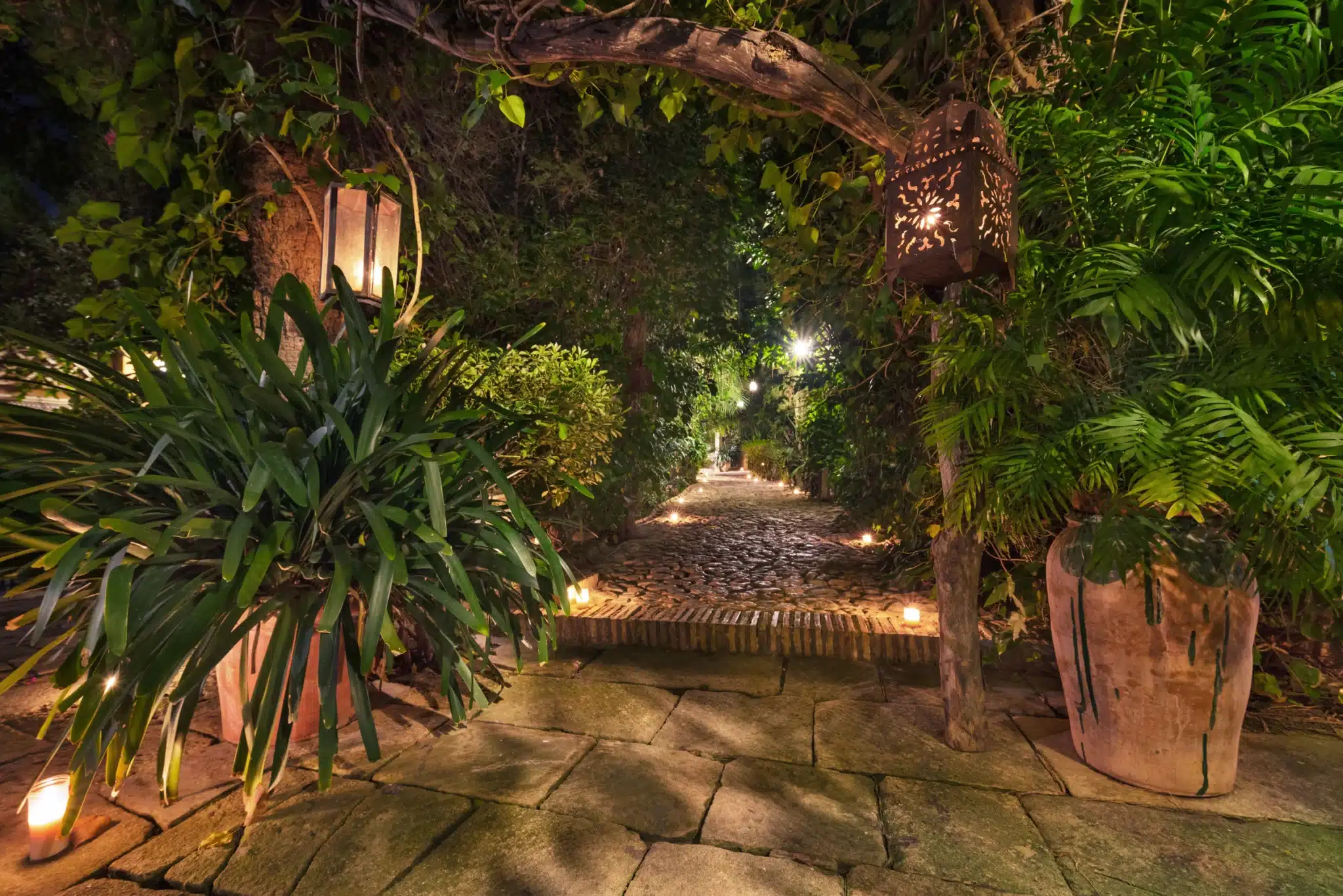
- Pathways: Steer clear of tall, harsh bollard lights unless the design calls for them. Instead, look for discreet fittings that blend in—recessed lights, spike spots tucked into planting, or softly glowing edges.
- Seating areas: Built-in benches with underlighting create a floating effect, while planters and side walls can hold compact, decorative fittings that give off just enough light for conversation.
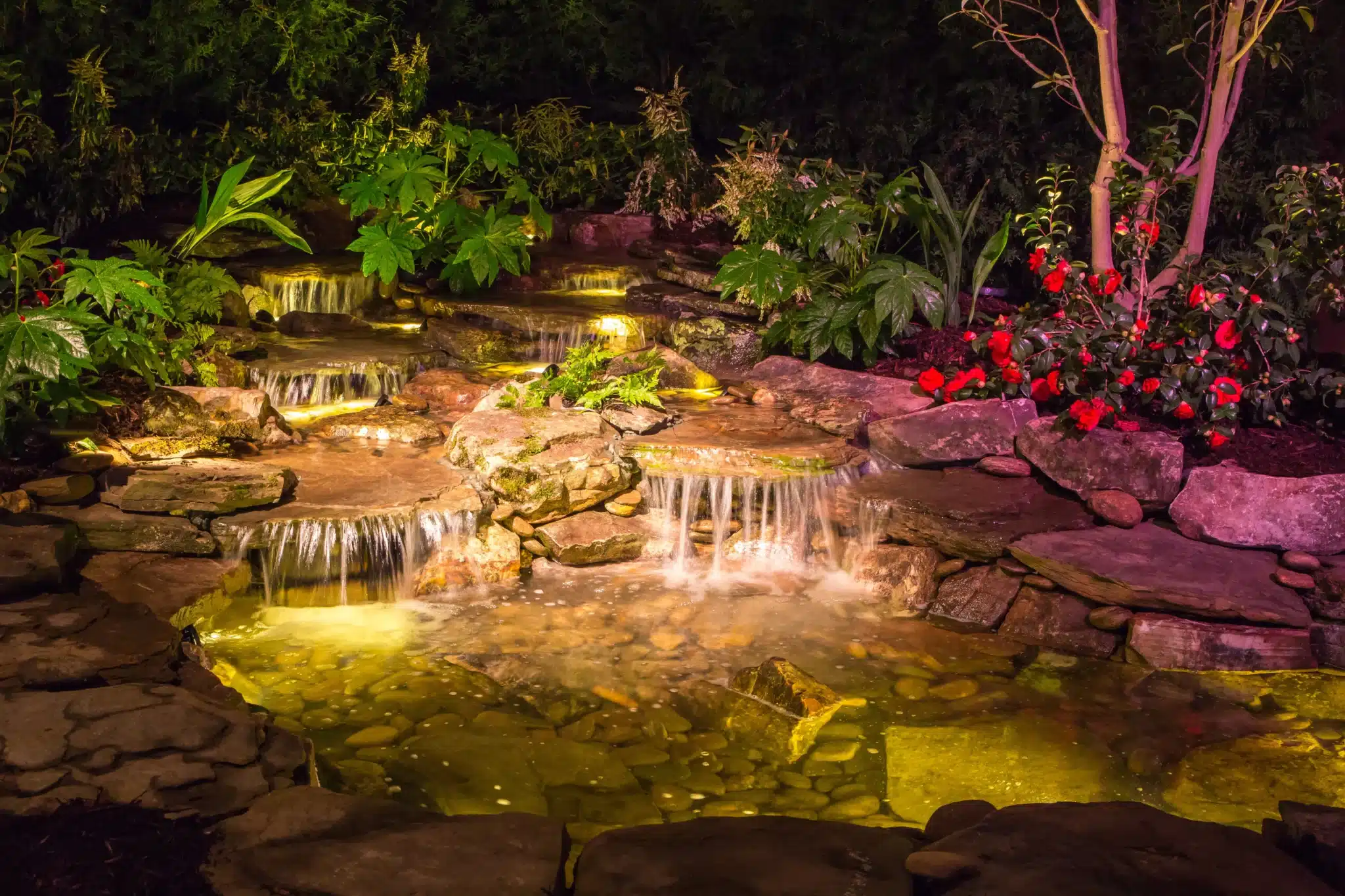
- Water features: Lighting water can add incredible atmosphere, especially with still surfaces that reflect the surrounding landscape. Use submersible lights in ponds or concealed spots to graze across fountains and rills. The key is subtlety—too much brightness can flatten the effect or cause glare.
Pro insight: The best garden lighting enhances the scene without drawing attention to the fittings themselves. Hidden light sources, carefully aimed, are the secret to a magical night-time garden.
5. Make It Flexible
With today’s smart technology, garden lighting design can be dynamic and adaptable. Pre-set scenes for dining, entertaining, or winding down. Use automated timers and sensors to save energy and enhance security—without lifting a finger.
Bonus tip: LED lights are long-lasting and energy efficient, especially when used with intelligent controls.
Need Help Getting It Right?
At Light & Shade by Seven, we create bespoke garden lighting designs that bring your outdoor space to life. Whether you’re working with a peaceful courtyard or a sweeping estate, our expert team will craft a lighting scheme that is elegant, functional, and effortless to control.